Log in to the Embrace dashboard
Getting started with the Embrace dashboard
Logging in
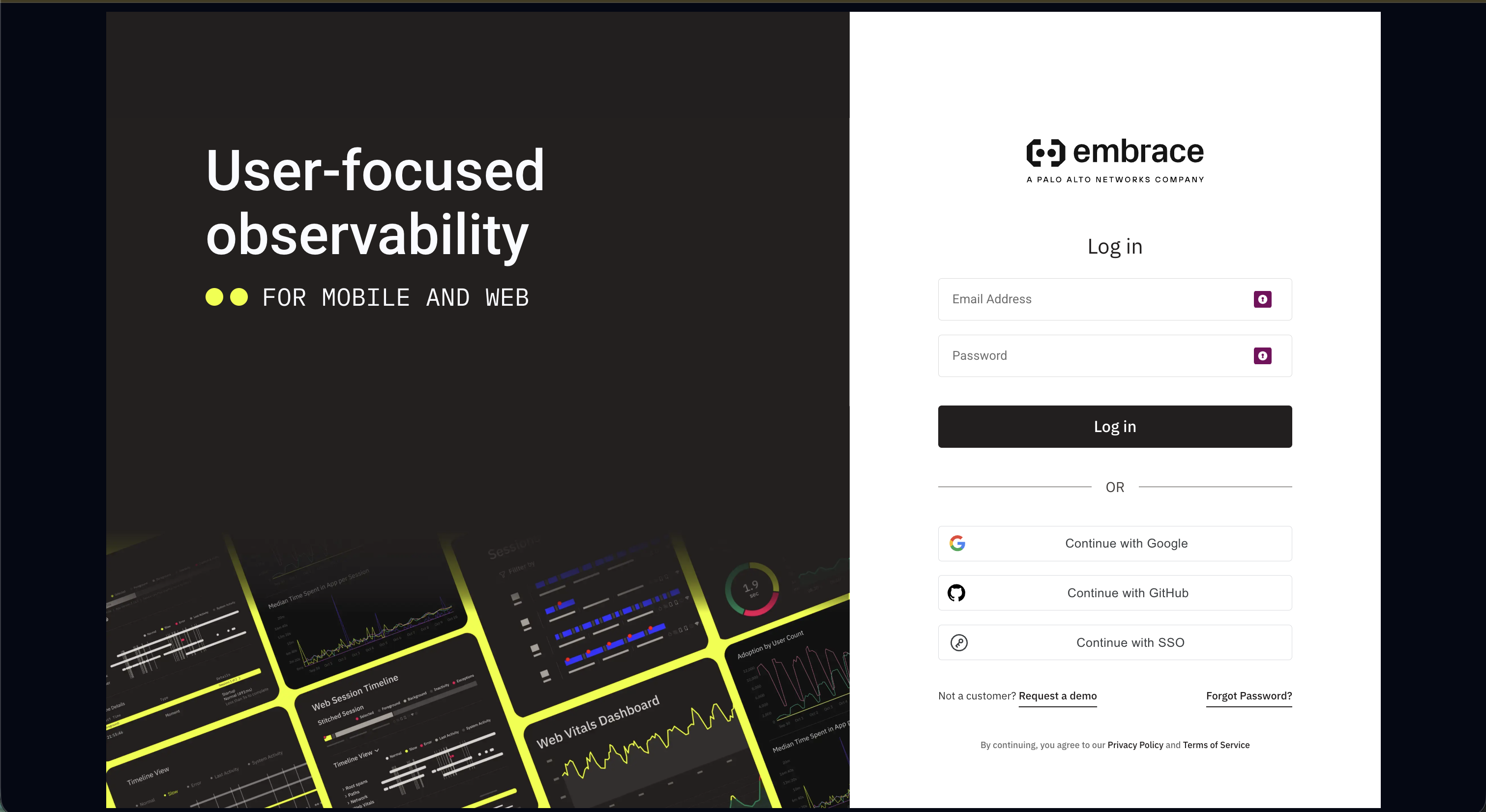
Before being able to integrate, you'll need to create an account on the Embrace dashboard so you can access your app ID and API token. Open a browser and navigate to dash.embrace.io.
Either login if you have created an account already, or follow the prompts to register for a new one.
Integration page
Once you've finished logging in or registering for a new account, you'll be able to create a new app. Follow the prompts until you get to the integration page. Keep this tab open in your browser throughout the integration process. This will assist you in verifying that data is sent, along with helping you become familiar with the features the Embrace Dashboard offers.
Take note of the app ID and API token, as you'll need those when integrating the Embrace SDK with your app.


Create separate apps in the Embrace dashboard for each platform:
- One Android App :: One Android App ID
- One iOS App :: One iOS App ID
This setup allows us to have platform-specific SDK configuration as well as separate data streams.
At the end of the day you would have two app ids (one for Android and another one for iOS if integrating both). Once we have all of the relevant apps and app IDs, we are ready to add the SDK to your app.
Use without an Embrace account
To send data only to your own backend and not to Embrace, start the Embrace SDK without an app ID or token and configure OTLP export with at least one span exporter or log exporter.
The setup script and Expo config plugin only add the code needed to start Embrace, so you need to add the exporters to your native code yourself.
Android
For Android both values can be omitted in the embrace-config.json file. For more information visit Avoiding sending telemetry to Embrace. Please, make sure you also add embrace.disableMappingFileUpload = true to your gradle.properties file.
iOS
For iOS the appId can be omitted as well when the SDK is initialized and configured through the code.