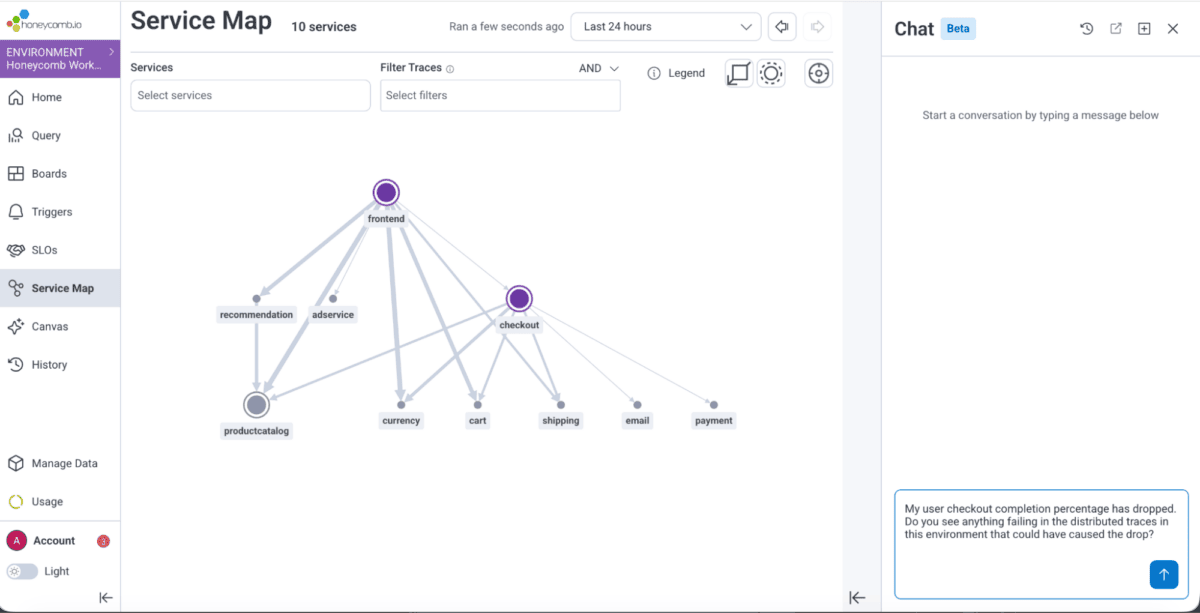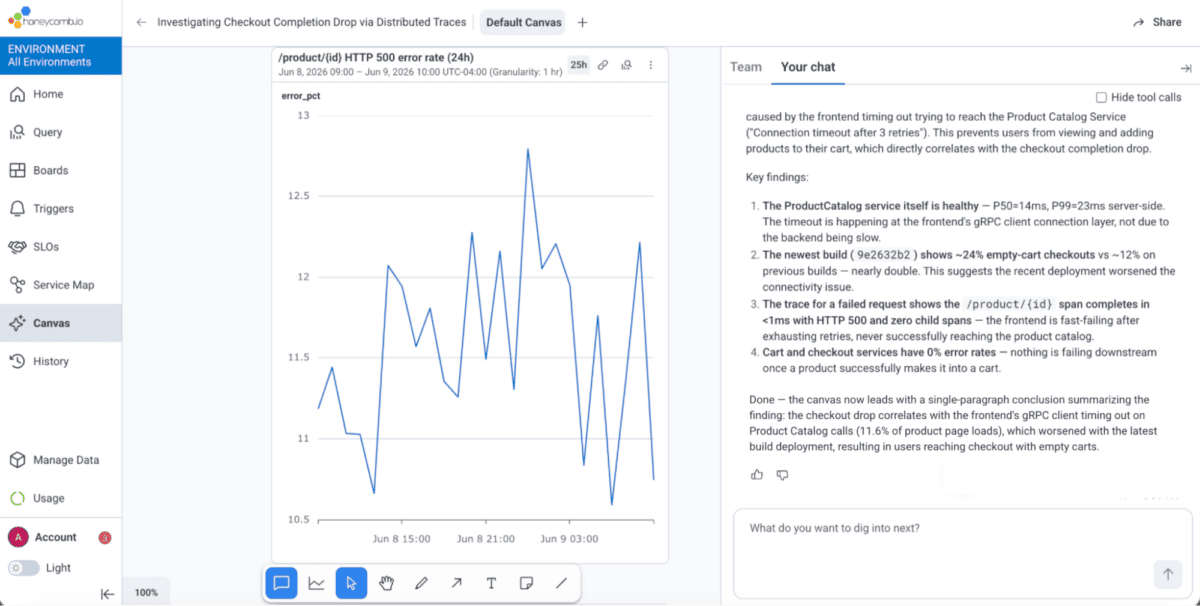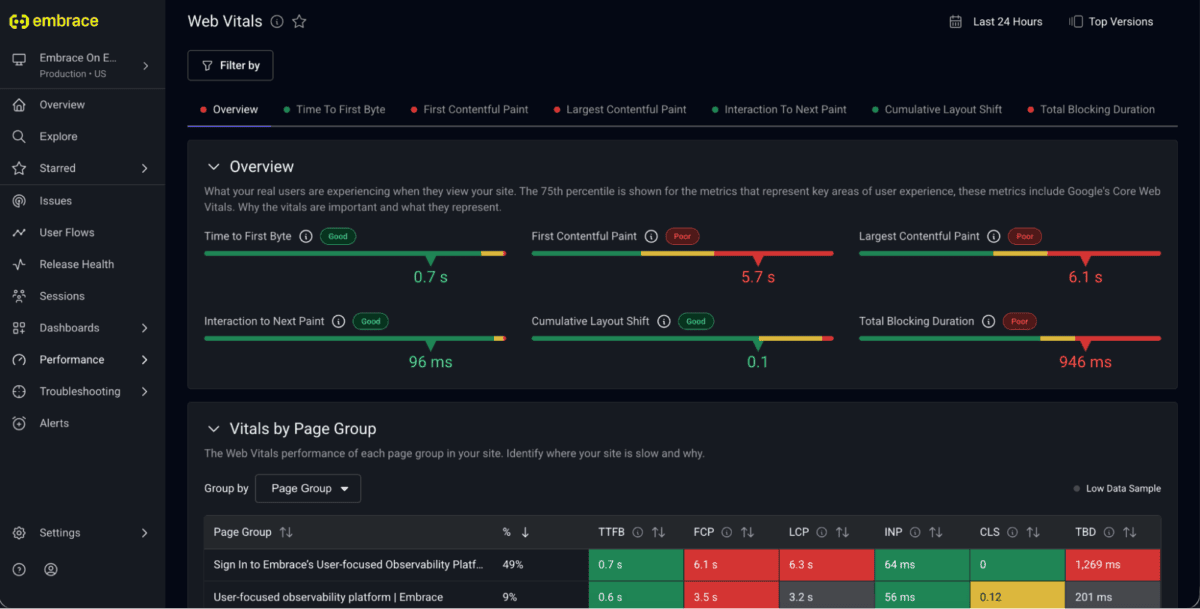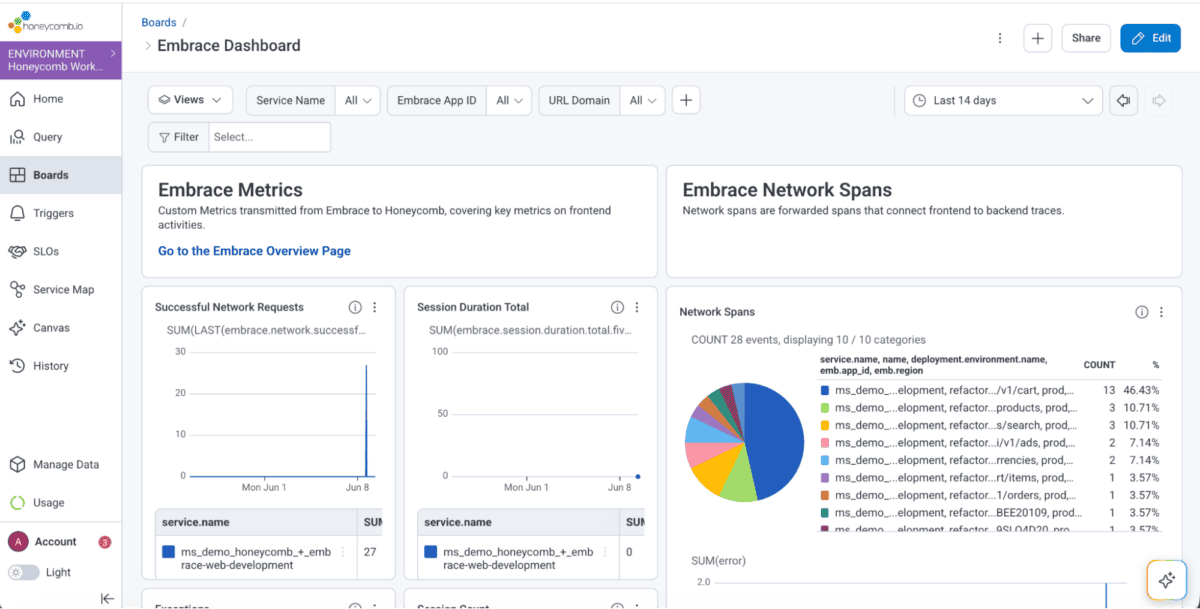
Production issues rarely stay in one layer of the stack.
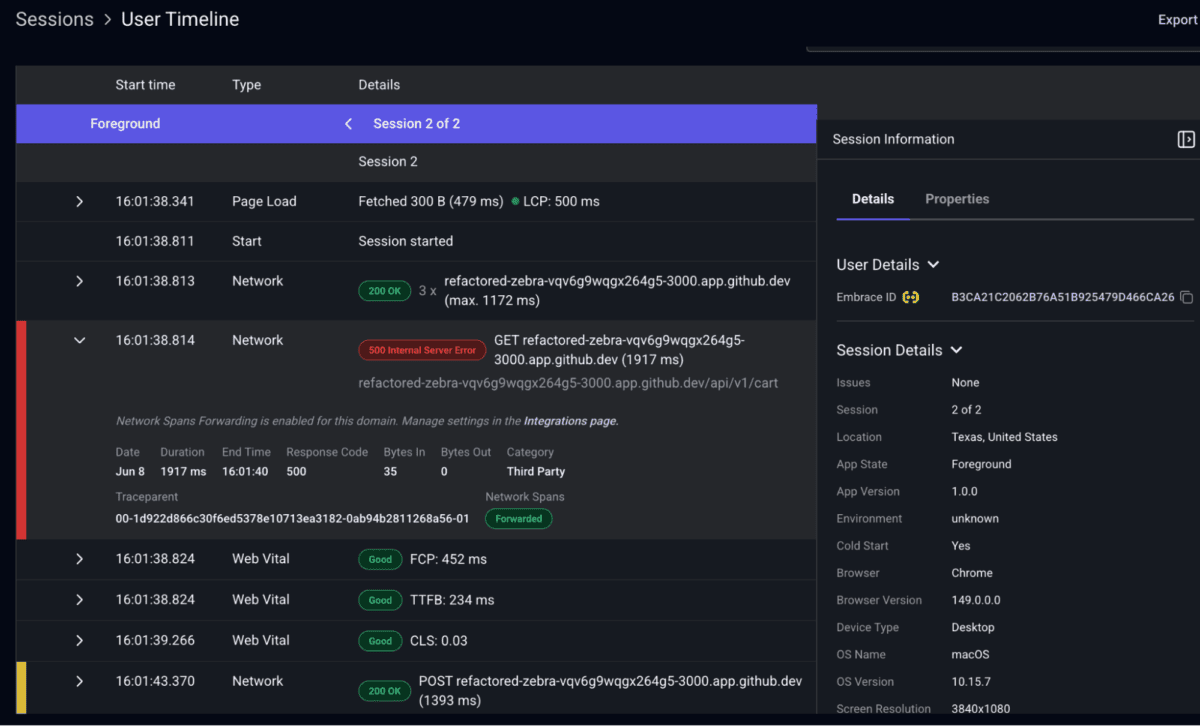
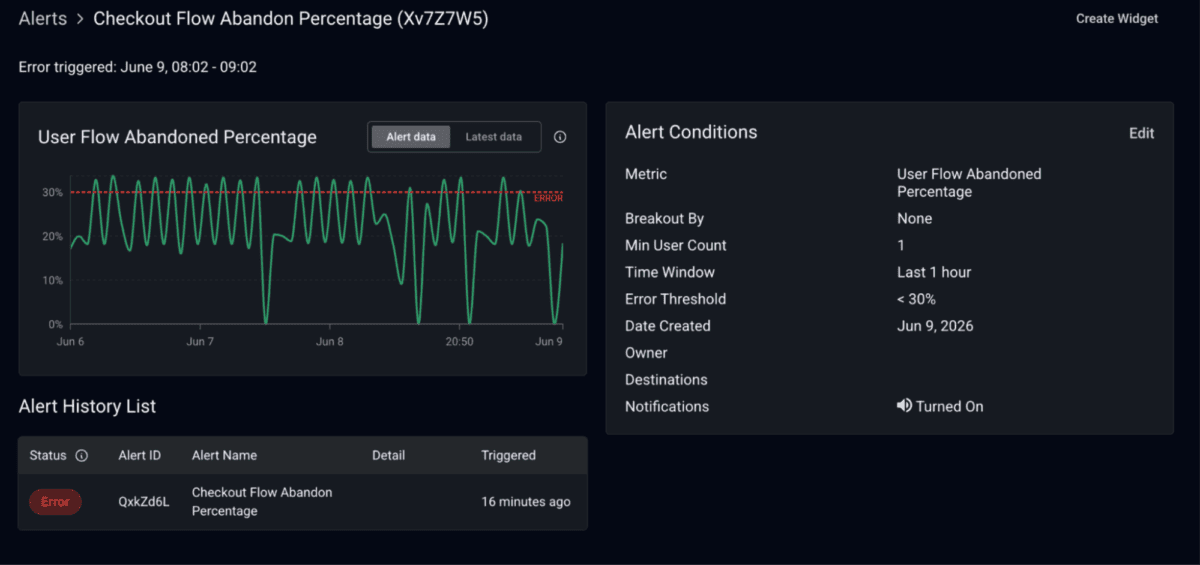
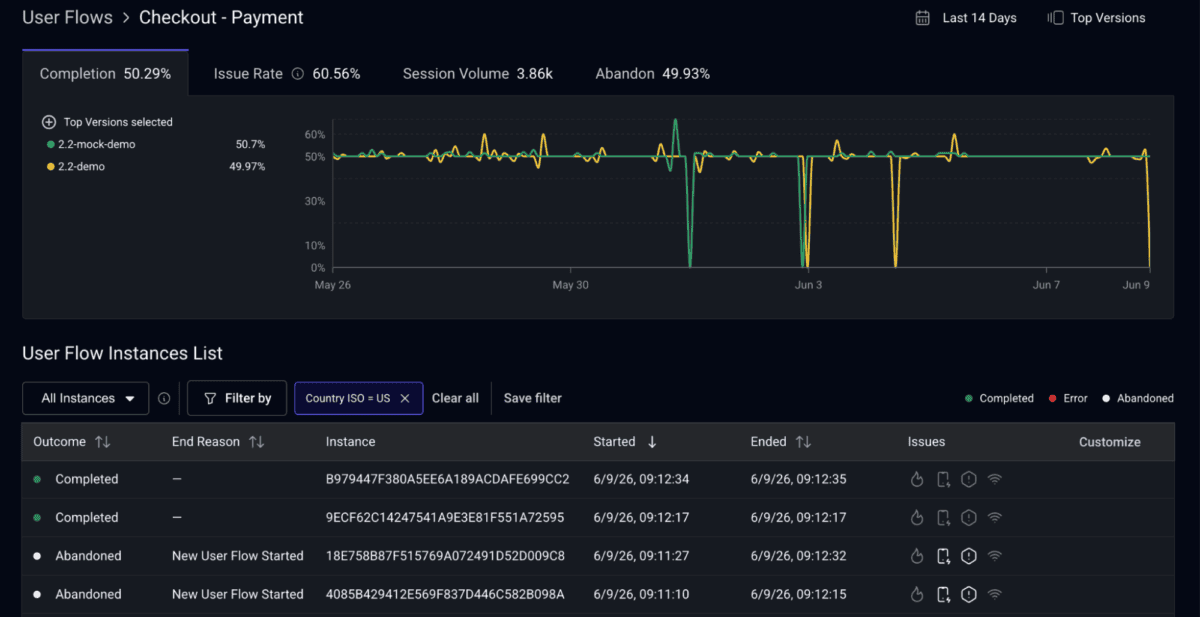
A drop in checkout completion might look like a mobile problem until the session timeline points to a failing backend request. A slow endpoint might look like a backend issue until you realize it only affects one app version. A Core Web Vitals regression might sit below alerting thresholds for weeks while real users quietly feel the drag.
That is where teams lose time. Not because they lack data, but because the data lives in separate tools, shaped for separate teams, with just enough missing context to slow down every handoff.
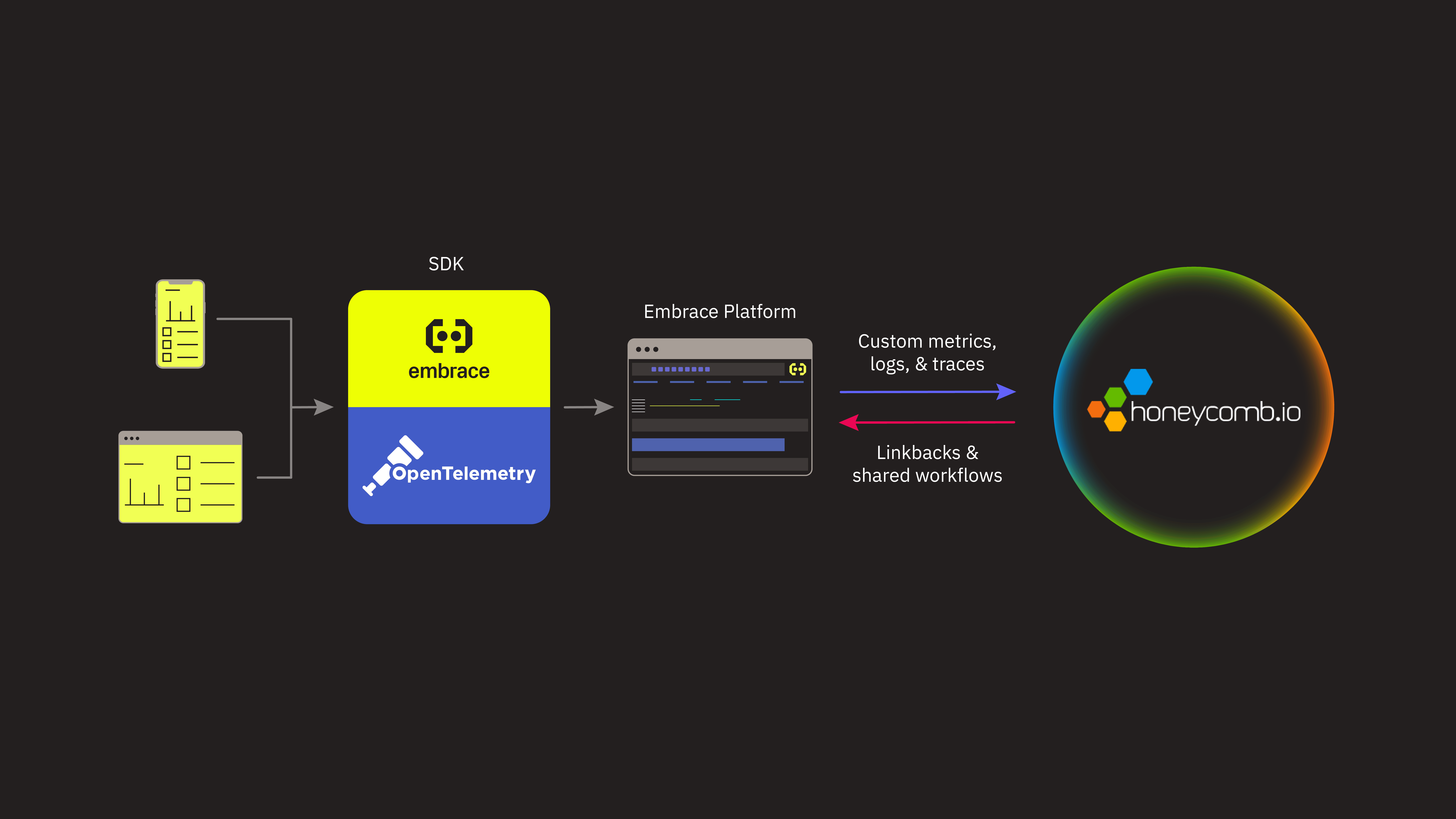
Embrace and Honeycomb are working together to close that gap.
Honeycomb gives teams deep backend observability, high-cardinality querying, and distributed tracing for complex production systems. Embrace gives mobile and web teams a user-centered view of app performance: sessions, screens, taps, crashes, app hangs, ANRs, network requests, Core Web Vitals, exceptions, and the timeline of what actually happened to a user.
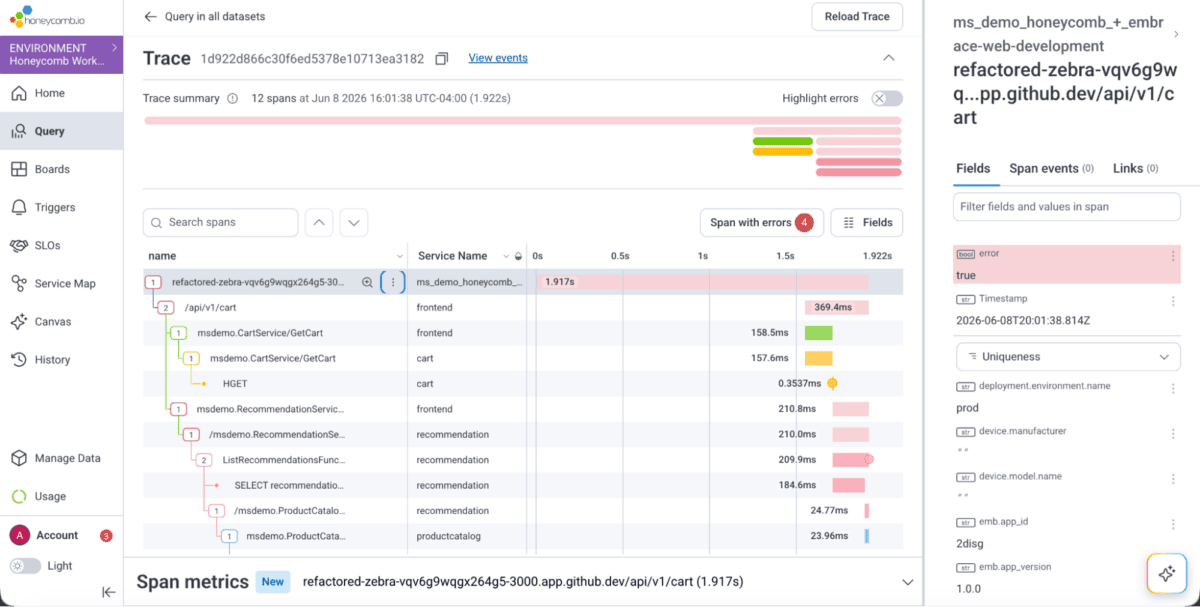
The integration connects those views through OpenTelemetry and W3C trace context, so teams can move between frontend experience and backend behavior without the need for manual stitching together of timestamps, request IDs, screenshots, and user reports by hand.
SREs, backend engineers, mobile engineers, and frontend teams often start investigations in different places because they are answering different first questions.
The goal is simple: Make the handoff faster, cleaner, and more useful. Today, I’ll show you three specific use cases for uniting frontend performance with backend reliability.