

We recently surveyed 300 engineering professionals across 16 countries to find out where web and mobile teams actually stand on AI and observability. After all, you can’t throw a stick without hitting a new AI SRE solution, but is the same true for frontend teams? Are they actually using AI in their observability practices today? Perhaps more importantly, are they even ready for it?
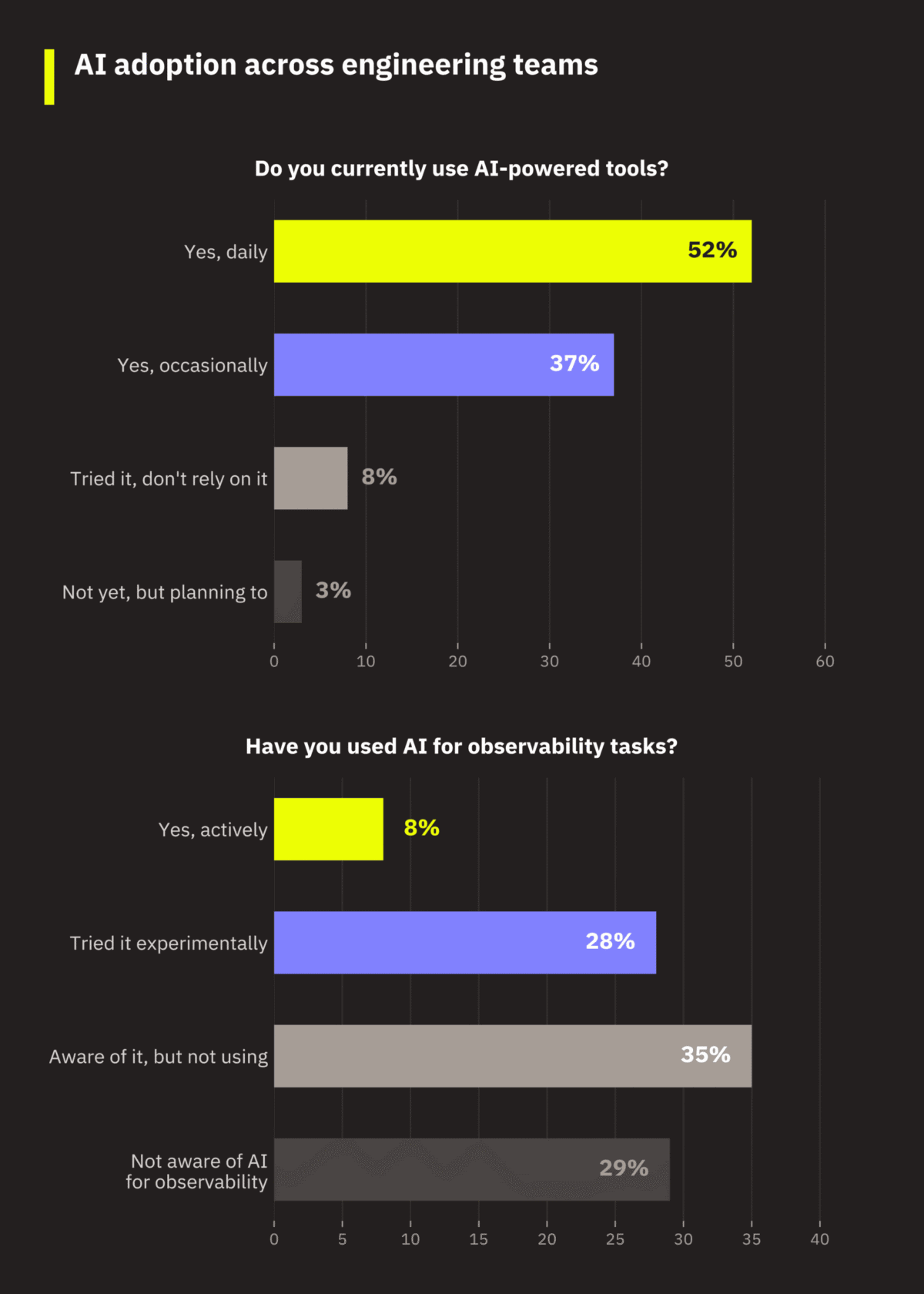
Let’s start with what’s probably obvious in 2026 when it comes to using AI in software engineering. Almost everyone is using AI. Eighty-nine percent of respondents use AI tools somewhere in their workflow, and 52% reach for them every single day. Agentic engineering has not only arrived, it’s kicked down the door and parked itself on the couch.
However, it gets interesting when we look at where teams are using AI:
- Seventy-eight percent use AI for code generation.
- Sixty-three percent use it for debugging.
- Fifty-seven percent use it for code review.
- Fifty-five percent use it to write tests.
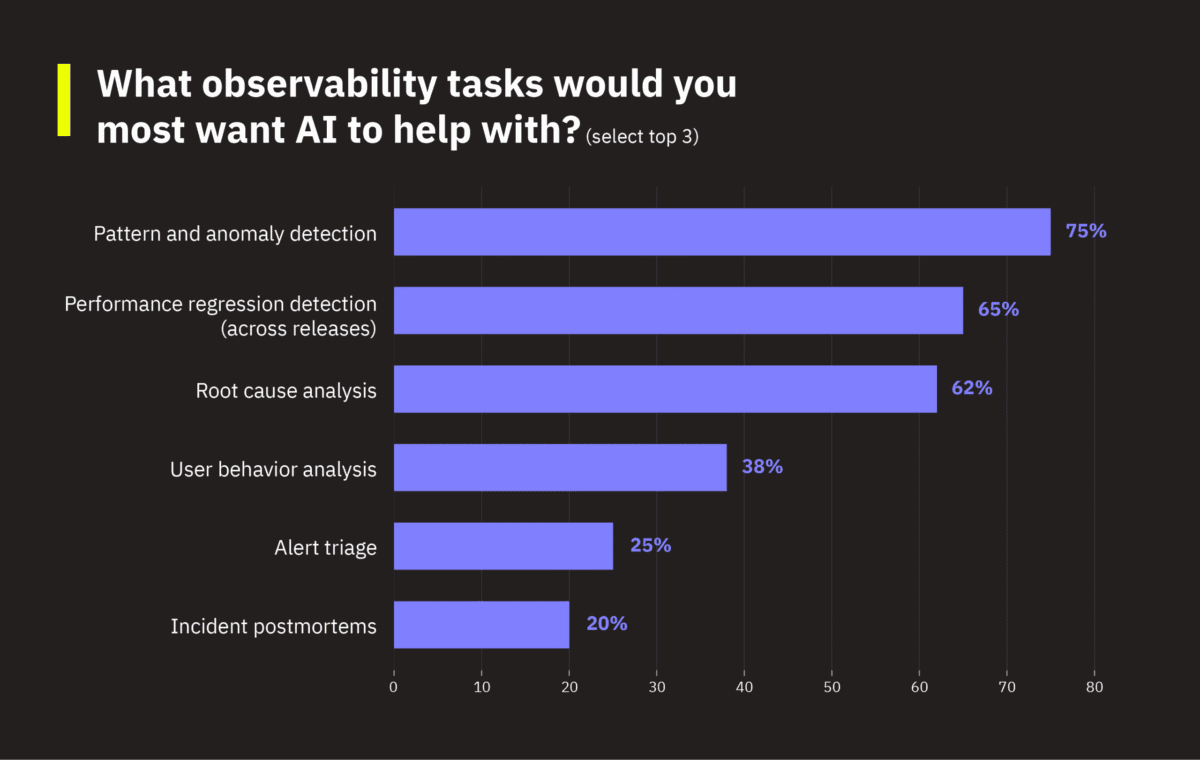
You might be nodding at these numbers because this tracks with how your team uses AI today. But what’s interesting is that only 8% of teams actively use AI for observability tasks. And 29% did not even know that was an option.
That is the finding that should give you pause.
You’ve probably known for a while that developer adoption of AI was on an “up and to the right” trajectory. For example, last year’s Stack Overflow Developer Survey, the largest of its kind with nearly 50,000 developers worldwide taking part, found that 84% of respondents are using or planning to use AI tools. It also found that more than half of professional developers use them daily.
Our survey data, focused on web and mobile teams, shows the same pattern. AI tools have made it into the terminal. They’ve made it into the IDE. They’ve made it into everywhere your teams are writing, testing, and shipping software.
But they haven’t made it into the places where you’re finding out how your users actually experience your software.
In fact, there’s a sizable gap when it comes to web and mobile teams using AI for observability.
Let’s explore why this is happening.